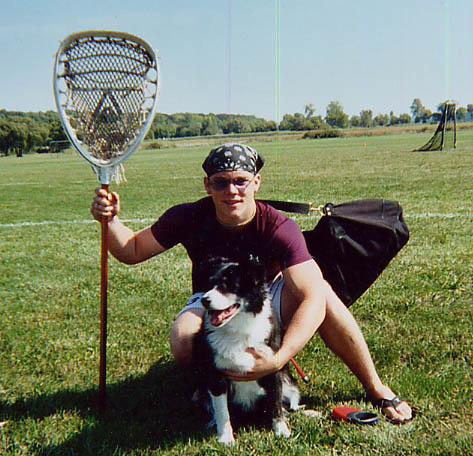
"I wish everyday I could go back to that naive place in the world where life was so simple. Where people were inherently good, where the sun shined just a bit brighter. It's not simple. There are really bad people out there and they do really bad things."
- Sara Jenkins, sister of Chris Jenkins
When University of Minnesota student Christopher Jenkins disappeared and his body was found in the Mississippi River, his parents, Jan and Steve Jenkins, embarked on a journey of remarkable courage to seek answers and justice. Through their perseverance, the family was able to uncover clues indicating that Chris may have been abducted and murdered. His official cause of death has been reclassified from accidental drowning to homicide. Charges have yet to be filed in his death.
After a 6 p.m. keg party at his home, Chris Jenkins, his girlfriend, Ashley Rice, and a few friends headed over to the Lone Tree Bar & Grill at 528 Hennepin Avenue in downtown Minneapolis. The group arrived at the bar between 10:30 and 11:00 p.m. and parked the car just south of the bar. Sometime around midnight, Chris Jenkins was reportedly kicked out of the the bar. Witnesses said the head of Lone Tree security instructed staff not to allow Chris back into the bar, despite the 20-degree weather outside. Wearing only his American Indian costume--a brown nylon shirt and pants, slip-shoes, and a headband with a red feather--he was put out on the street. He did not have a coat, and his wallet, cell phone, and keys were inside with his friends.
It was the last time he was seen alive.
After little progress was made by local authorities in finding their son, Jan and Steve Jenkins decided to take matters into their own hands. A possible tip indicated that Chris may have been spotted walking north across the Hennepin Avenue bridge over the Mississippi River. The Jenkinses were able to find surveillance footage of the bridge and have it reviewed.
"There were two surveillance cameras on the Federal Reserve Bank pointing to the Hennepin Avenue Bridge," says Jan. "This was post 9-11, clearly good equipment. We have written documentation from the supervisor that more than one person viewed the tapes from both cameras late on the 31st and early on November 1. Chris was not seen on the tape. We do not believe Chris walked across that bridge. The supervisor told the FBI that it would be almost impossible for a person to sprint across that bridge and not be seen."
They also hired a private investigator, Chuck Loesch. Loesch found witnesses who reported that a gang of at least 10 men had attacked a man in front of Times Square Pizza (across the street from the bar), in what was thought to be a gang initiation. Although, the time of the incident has not been confirmed--it could have been around the time Chris left the bar.
Two bloodhounds with different handlers were also brought in by the Jenkins family on two separate occasions. Both dogs picked up Chris's scent on the sidewalk in front of the pizza joint where witnesses reported seeing the fight. Both dogs followed the scent into the parking garage next to the pizza joint. And both dogs followed the scent right to the same parking stall. Later, blood drops and a red feather, possibly from Chris's Native American costume, were reportedly found inside the garage.
Recovery and Investigation
Almost four months later, Chris’s body was found snagged on some tree branches in the Mississippi River in downtown Minneapolis. The body was on the east side of the river near the spillway of the St. Anthony Falls Hydroelectrical Laboratory at 30 SE 3rd Street. (See
Map.) It could be seen from the 3rd Avenue bridge, floating on its back with its arms in front.
Police initially believed Chris either committed suicide or died accidentally after falling into water. But all those who knew Chris felt differently. Chris was a star athlete--a two-time team captain of his lacrosse team. He was set to graduate with stellar grades from the university's prestigious Carlson School of Management, and had job interviews lined up. He was happy, easy going, very responsible, and he had plans for the future.
The Jenkins family consulted with numerous experts, including global experts in water rescue and recovery, renowned forensic pathologist Dr. Michael Baden, and even reviewed their own son's autopsy photos. They learned that the appearance of Chris's body did not fit with the suicide or accident theories held by the police. Most drowning victims are found face down with their arms out toward their sides, their clothing disheveled, and one or both of their shoes missing. This is because one's natural reaction when drowning is to vigorously paddle the feet and arms and swim. Chris's body was found on it's back, arms crossed in front, his shirt tucked in to his drawstring pants and still wearing both over sized slip-on shoes. He also still had on a necklace, a ring on the left index finger and a ring on the right ring finger.
Case reopened, death reclassified as homicide
When a new police chief, Tim Dolan, was hired for the city of Minneapolis, the Jenkins family brought him the leads uncovered by their private investigator and the new evidence they had found. The chief agreed that the case had not been thoroughly investigated. In 2006, Dolan reopened the case.
That same year, an eyewitness to crime (someone in jail and reportedly facing felony charges for another crime) stepped forward to claim he was present when Chris was thrown off a bridge. The inmate told investigators that his acquaintance, after robbing Chris and finding nothing of value, became angry and threw him off the Hennepin Avenue bridge. It is not known whether the eyewitness was involved in the crime, or only providing information to bargain for leniency, but the claim had other problems.
If a bridge was involved, Chuck Loesch believed, it could not have been the Hennepin Avenue bridge. The physical layout, which includes a steel beam and suspension cables, would have made it nearly impossible to throw someone over without injury. Jenkins was not found to have any broken bones, meaning that the killer would have had to lift a grown man over the high safety railing and throw him 4- to 5-feet out over the support beam, avoiding the vertical cables in the process. The bridge is brightly lit and has heavy traffic, and no one reported seeing anything unusual on the bridge that night. Cameras with a view of the bridge also did not capture anything suspicious, including Chris walking across the bridge.
Loesch, in fact, believes it unlikely that Chris was thrown from a bridge at all. Given the fall and the river's current, Chris's shoes would not have stayed on his feet.
But where Chris entered the water may be significant: If it was further upstream, it would point to a vehicle being involved in the crime. And Chris's family has said they have various reasons to believe Chris was "thrown in the back of a van - abducted, tortured, and eventually murdered."
In 2006, Chris's death was reclassified as a homicide. During a press conference, Chief Dolan offered the Jenkins family a public apology. But in July 2007, Hennepin County declined to press any charges in the case, citing lack of evidence. The case remains unsolved.
Chris's mother, Jan Jenkins, has written a book about the family's struggle for justice. For more information, check out
http://www.legacyofcourage.com/.
Case Facts:
Name/age: Christopher Mark Jenkins, 21
Hometown: Eden Prairie, MN
Residence: Minneapolis, MN
College: University of Minnesota’s Carlson School of Management
Major: Marketing and entrepreneurial management
Physical description: athletic (goalie and co-captain of lacrosse team)
Recovered: 02/27/03 at 1650 hours in the Mississippi River near the Horseshoe Dam south of the Third Ave. Bridge just above St. Anthony Falls. Cause of death: Drowning.
Manner of death: reclassified as a homicide
Injuries: none visible
Blood Alcohol Content: 0.07 in deep tissue, .12 in heart
Water temperature: 33 F when found
Air temperature: 35 F when found